Thursday, March 29, 2012

The Age of Persuasion

Computer Lab: Thursday March 29, 2012:

  Time to work on your online Persuasion Map. Using your materials from your persuasive essay planning and draft, create a detailed persuasion map that you can print out and use to help you for the rest of the assignment.


Thursday, March 22, 2012

Friday, February 3, 2012


Vedic multiplication is demonstrated. Solve multi-digit multiplication with lines and dots. An illustration that there truly are many ways to solve a math problem.
Trouble with your 9 facts? Solved.

Thursday, January 19, 2012

Grade 4 Science....

Looking to identify a rock you've found?  Try this rock key identification site we used recently in class.

Monday, December 5, 2011

Your Age on Other Worlds

How old are you on Mars?  How about Venus or Uranus?

Find out.


Tuesday, November 29, 2011

Videos from class

A few recently shared videos from class:

Lego/Smartphone Cube Solver


Less quick, but lego robots are up to other things as well...


Toronto City Hall Blinkenlights Display As Featured on Daily Planet

Blinkenlights Stereoscope @ Daily Planet from Tim Pritlove on Vimeo.

Friday, November 25, 2011

Computer Lab:  November 25, 2011

Fill out this reading survey.  Each member of your pair should do this completely and carefully.  When you are finished, check with Mr. Crunkleton for further instructions.

Thursday, November 17, 2011

Reading at Funbrain (check it out during computer lab)


What does it feel like to fly over planet Earth?


Wednesday, November 9, 2011


Today you'll all be reading and experiencing an interactive history lesson of sorts that will give you an understanding for what life was like in the trenches during the terrible conflict of World War I.  You often hear about this conflict which is where the tradition of wearing the poppy began, but sometimes it is difficult to relate to what life was like during the time.

Treat this experience with respect and please remember it is based upon what real people had to go through.

Listen to the story, with the volume VERY LOW (or you will forfeit the right to use the volume at all), but mostly read the interactive story you will be involved with.  Click on vocabulary words to find out more about them.  In another tab, open this question form that contains questions about the experience you are reading.

** Make sure your group has completed the question form and the interactive reading before leaving computer lab today. I will be checking from home.**

The interactive reading:

Instructions:

  1. Click here, on interactive reading.
  2. Click begin your adventure.
  3. When it asks you for your name, a friend's name, and the city you live in, it isn't going to keep the information.  It's to put you inside the story.  You can make up a false name if you like, but keep it respectful.
  4. Enjoy the experience, remember to keep your volume very low.  If it is too high, you will be asked to do this without the volume, and just by reading.  Use your good sense!
  5. Appropriate behaviour for a computer lab and a remembrance day activity please.

Thursday, November 3, 2011

Create a Stem and Leaf!


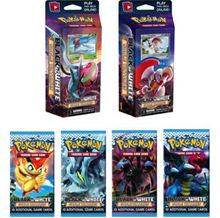
Computer Lab:  November 3, 2011:  Pokemon Steam and Leaf Assignment


Today in computer lab we will be creating a steam leaf plot based on the Pokemon Trading Card Game expansion sets. There have been many sets of expansion cards in the Pokemon Trading Card Game. The first expansion "Jungle" came out in 1999...that's before you were all born. An article detailing these card sets can be found here.

Today you'll be using the following website to create a stem and leaf plot of the number of cards in various Pokem Trading Card Game Expansion sets.  Don't use the "base sets", just expansion sets.  You can include as much data as you want...there are plenty of expansions sets to use.  If you just want to do third generation up for example, you can do that.  Or you can try to include EVERY expansion set, you know, if you gotta catch'em all.

Stem and Leaf Plot can be made here.

We'll go over how to use it in class.  Each group will be responsible for printing one stem and leaf plot today.  Each plot must have a properly worded title.  The title should be representative of what information is in the plot.  If you only detailed third and fourth generation expansions, make sure you say so.  Don't just call it "stem and leaf plot".  I can see that from looking at it, I want to know what the data I'm looking at is, even if I didn't know what the assignment was.

Try to include as much data in your stem and leaf plot as you can.  When it is finished, print it out and include your name and your partner's name on the sheet and turn it in.  Include the date as well.


Thursday, October 27, 2011

States of Matter: Changes

Grade 5 Science:  States of Matter:  Changes

Getting Started, something to get us thinking about changes in state.


When have you observed a material undergoing a change of some kind?

Reversible and Irreversible Changes

Check out this interactive online lab activity exploring reversible and irreversible changes, and how they are different.

Let's try to share all the types of changes.


Monday, October 24, 2011

Results from Character Poster Project

The results are in from the class vote on the most effective Character Posters from last week's homework project.

Students created posters using text features to effective showcase a character from the narrative each student was reading at home that week.  There were a lot of impressive posters, and the students selected their favourites.

Here is the result of that vote:

Thursday, October 20, 2011

Computer Lab Thursday

Today we'll be practicing using an interface we'll be doing a number of things with this year.  It's called a form.

Each partner will be responsible today for filling out this form.

We'll then go back to class and see how the results work.

Wednesday, October 19, 2011

Solid, Liquid, Gas

Thursday grade 4's will be beginning their study of the regions, provinces, and territories of Canada with Ms. Li and grade 5's will be beginning an investigation of the Properties of and changes in matter.

Here is a link to today's grade 5 science handout.

Today we will be introducing 2 important big ideas:

1.  There are 3 main states (or phases) of matter.  Solid, Liquid, and GaS.

Other more exotic states/phases exist (such as plasma) but are not as commonly experienced.


2.  Matter the changes state is still the same matter.

Water that freezes into ice is still water, it's just changed into the solid state.  Water that evaporates or boils into water vapor (or steam) is still water, it's just changed into the gaseous state (changed into a gas).  Every kind of matter can change its state...not just water.  Rocks can melt, or even be vaporized if enough energy (heat) is applied.


So what is matter and how does it change into different states?


Okay, rocks can melt.  I get that.  But what does rock in the gas state look like?


Thursday, September 15, 2011

A Day Without Gravity
Narrative Writing

Today students began by watching two quick videos about experiences in zero gravity situations.


Students paired up and exchanged ideas of fun situations and problems that could occur on a day without gravity.

We reflected together afterward about four of the characteristics of a narrative we had touched upon previously:

Setting, Characters, Problems, and Solutions.


Finally students began sharing some of their ideas and we grouped them into each category as best we could.  We talked about the importance of pre-writing before doing any sort of narrative writing.  We want our story to be focused, fun, and to avoid being disorganized.  Pre-writing is the fun and imaginative first step of the narrative writing process!


Monday, September 12, 2011

Today we began our unit on narratives.  We didn't get as far as expected, but we began a shared reading that will continue on to Tuesday of Anything For The Bike.  Students should have this hand out in their language folders.

Today the students had their first music/drama class with Ms. Amenta.  Despite a hot muggy classroom the students seemed to do very well with the introduction to body percussion.

Our routines slowly are being applied, one at a time.  This week we can expect the homework routine to be clearly defined at some point.  Students should be reading nightly, and reviewing their planners whether or not they have any other work listed.

Homework will NOT be assigned on weekends unless students are behind in their class work this year.

Homework is not meant to be new material, and is to give support to what we learn in class.  It should never take more than 40-50 minutes.  If it does, please write a note in the homework journal or feel free to call the school and discuss it with me.  Our homework policy is tied to the large TDSB policy on the subject.


Friday, September 9, 2011

Update on beginning of the year form completion:

It is still important that all students submit ALL beginning of the year forms including the Student Data Verification Form and the "rainbow" packet that was sent home this first day.

We had our first fire drill of the year this year, and I'm pleased to report the class behaviour and efficiency during this time was exemplary.

The class was introduced to Apples to Apples:  Junior edition today.  The game is incredibly fun and encourages all the right types of thinking in students.  It is directly tied to vocabulary building, synonyms, and the art of thinking about how we express ourselves and write.


Daily Vocabulary:

exemplary:  Adjective, comes from the word "example".  Worthy of being imitated or patterned after.

Amanda has a birthday coming this weekend.  Enjoy your day Amanda!


Thursday, September 8, 2011

We continued our discussion of synonyms and how they can inform our thinking about how we express ourselves in writing.  The class watched a movie clip from the movie We Are Marshall and received a hand out containing a paragraph written about the scene.  The paragraph expressed the general idea but had some underlined words and phrases for the students to consider editing with an eye toward more effectively communicating.


Students met at first in teams to discuss and brainstorm ideas, and then returned to their desks to re-write the paragraph individually.

The class reviewed basic presentation procedure for written work to be handed in.  Identifying the front of a piece of paper, using both margin lines, skipping the first line, and selecting a descriptive title were all discussed.

The second introduction team challenge went swimmingly.  Students reflected on some key oral presentation elements (examples:  pacing, facing the audience, deciding for yourself whether or not your audience can probably hear you.) and most students showed marked improvement from the first introductions team challenge.  A couple even brought their classmates to applause.

We also practiced our evacuation procedures thoroughly, and by the third or fourth time the class did marvelously.

Some Vocabulary:
margin
indent
ellipse
elliptical
isosceles
scalene
drill